Moving to Spain in 2026: The Complete Step-by-Step Guide to Relocating, Finding a Home and Building a Life
After eight years living in Spain with a family of six, I share the honest, step-by-step reality of relocating — from budgets and schools to paperwork, work and choosing between coast and inland life.

Thinking about moving to Spain? Here's what I wish I had known before I made the move — from finding your home and understanding the costs, to schools, paperwork, work and what life in Spain is really like with a family.
There is a version of moving to Spain that you see everywhere online.
Sunshine. Beaches. A beautiful villa. Long lunches. A glass of wine overlooking the sea.
And yes — those things exist.
But after more than eight years living in Spain, I've learned that moving here is about so much more than sunshine and sangria.
It's about choosing the right area for your family.
It's about understanding the Spanish system.
It's about knowing what you can realistically afford.
It's about finding the right schools, doctors, lawyers and people around you.
And, perhaps most importantly, it's about building a life rather than simply moving to another country.
I know this because I've done it.
I live in Spain with my partner and our four children, and next year we're getting married here.
We first lived in Mijas on the Costa del Sol, and we now live a little further inland in Coín.
And for our family, moving inland has actually made life better.
Why we chose to move away from the coast
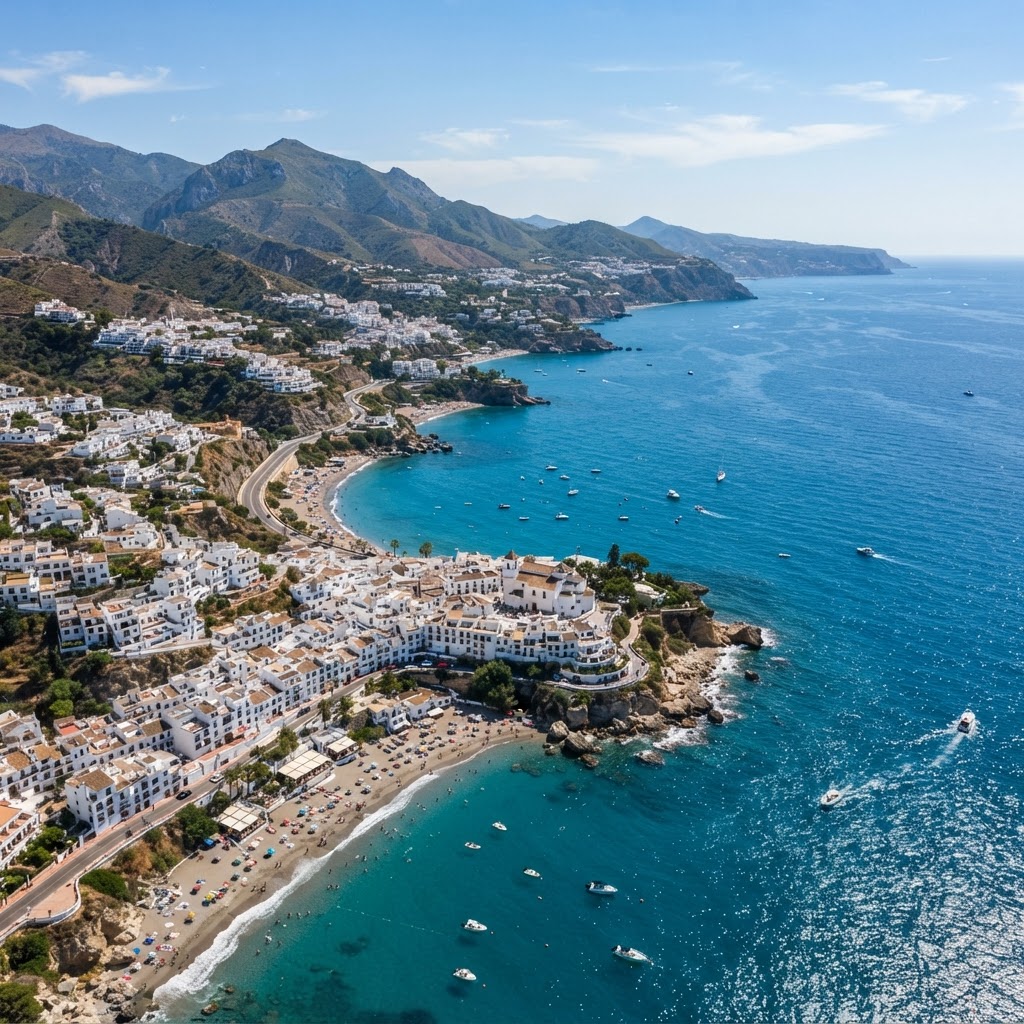
When people imagine moving to Spain, they often immediately think about living beside the sea.
And I completely understand why.
I loved living in Mijas.
But as our family grew, our priorities changed.
We wanted more of a village feel.
We wanted our children to have more freedom and space around them.
We wanted outdoor life to be part of everyday life rather than something we had to plan.
For us, Coín has provided that.
We have access to the coast, but we're also surrounded by countryside, outdoor activities and a strong community feel.
We're around 20 minutes from the beach, close to lakes and outdoor activities, and around 20 minutes from Málaga — a city I absolutely love, particularly the old town, port and everything it offers.
That is something I think future expats need to understand:
You don't have to live on the beach to live the Spanish dream.
Sometimes moving 20 or 30 minutes inland can completely change what your money buys you and the lifestyle your family can have.
Step 1: Decide what kind of life you actually want
Before looking at property, I would honestly recommend deciding what you want your everyday life to look like.
Do you want:
- Beach life?
- A Spanish village?
- A busy city?
- Countryside?
- A large international community?
- Spanish neighbours and a more traditional lifestyle?
- International schools?
- Spanish state schools?
- Easy access to an airport?
- A quieter lifestyle for children?
- Somewhere suitable for remote working?
- An investment property?
- A permanent family home?
These questions matter more than the number of bedrooms.
One of the biggest mistakes buyers can make is falling in love with a property before falling in love with the location.
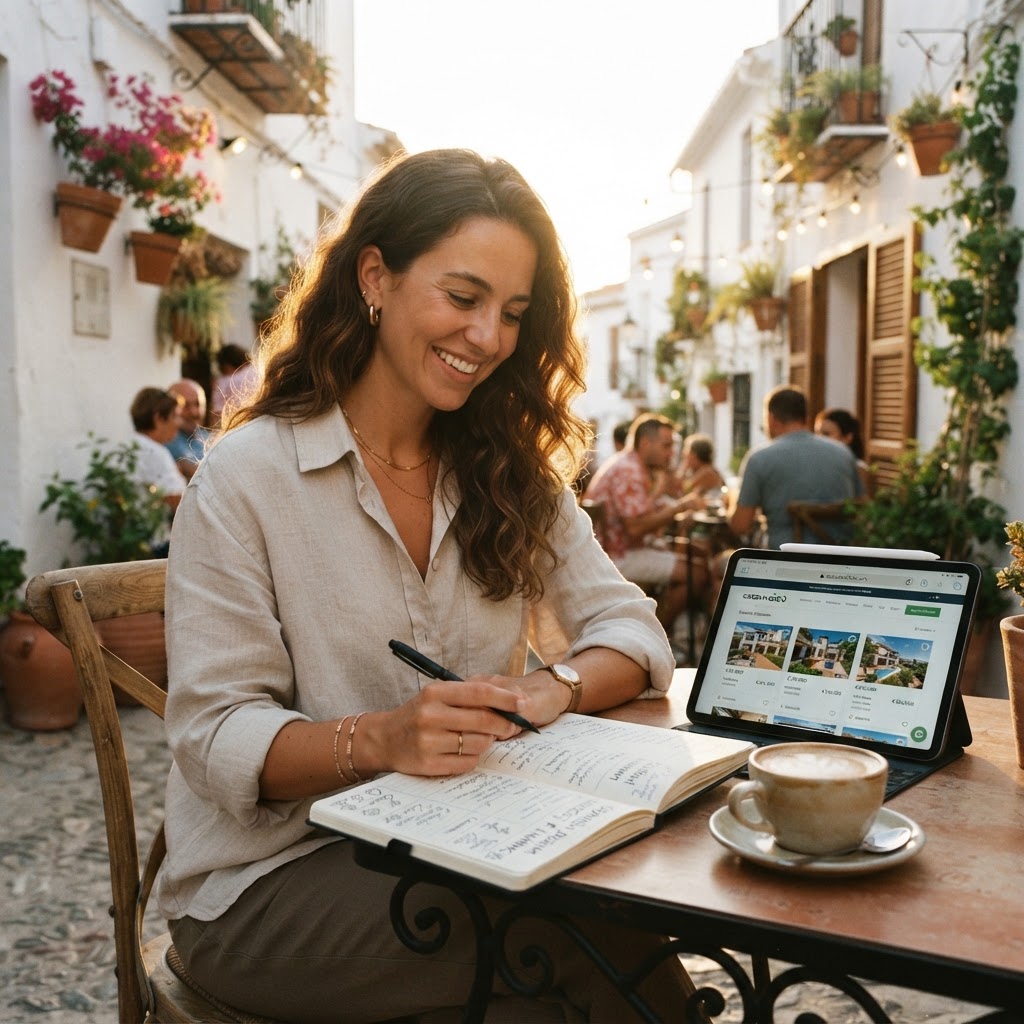
At CasaViva360, this is exactly why we want the property search to be about more than simply scrolling through photographs.
Your home needs to fit your life.
Step 2: Understand your realistic budget
This is where dreams need to meet reality.
The price you see on a property listing is not the amount you need to buy it.
If you're purchasing in Spain, you need to account for taxes, notary, Land Registry, legal fees and potentially mortgage-related costs.
Current 2026 guidance generally puts the additional purchase costs at around 10–12% of the purchase price, although this varies depending on whether you're buying a resale or new-build property and where you're buying. (Idealista)
For example, if you were buying a €250,000 resale property, a sensible starting point would be to allow approximately:
€250,000 purchase price + around €25,000–€30,000 additional costs
So you're potentially looking at approximately €275,000–€280,000 overall, before considering your specific mortgage arrangements and any unusual costs.
That isn't a quote — your lawyer should calculate your exact figure — but it's a much better starting point than assuming €250,000 is all you need.
For a mortgage buyer, you also need to think carefully about the deposit and what the bank is actually prepared to lend.
One current 2026 analysis estimated that an average two-bedroom buyer in Spain could need around €64,500 in savings upfront, demonstrating just how important having sufficient capital is. (Idealista)
The lesson?
Don't start with:
“How much is the house?”
Start with:
“What is my total budget for buying and living in Spain?”
Step 3: Renting first can be a very sensible option
You don't necessarily need to buy immediately.
In fact, for many families, renting first can be one of the smartest things you can do.
It gives you time to discover whether you actually like the area.
You might think you want to live directly beside the beach and then discover that a village 20 minutes inland suits your family much better.
Or you might think you want a busy expat area and realise you actually want somewhere where your children become part of a Spanish community.
Rental prices are not insignificant, however.
As of July 2026, the national average asking rent was around €15.30 per square metre, according to idealista's latest rental data, although prices vary enormously between regions and individual towns. (Idealista)
And one thing I always tell people who are moving here:
Be prepared for the upfront rental costs.
Depending on the property and agreement, you may need several months' money available upfront, alongside the usual deposit and other requirements. Always check exactly what is legally required for your particular tenancy rather than assuming every rental works the same way.
Step 4: Choose your location before choosing your house
Spain is enormous.
The Costa del Sol is not the same as Valencia.
Málaga isn't the same as Coín.
Coín isn't the same as Mijas.
And Mijas isn't the same as Marbella.
Your budget can also look completely different depending on where you search.
This is one of the reasons we created CasaViva360.
We're building a platform designed to help buyers look beyond a photograph and asking price.
Our aim is to bring together property search, AI-powered assistance, location information, Smart Hotspot analysis, price recommendations and relocation information so buyers can make better-informed decisions.
Because buying a home shouldn't simply be:
“I like this kitchen.”
It should also be:
“Does this location work for my family?”
Step 5: Think carefully about schools
This was a huge consideration for me.
I have four children, and our children have experienced different stages of the Spanish education system.
I currently have:
- One child in guardería
- One starting Infantil/primary
- Two children in high school
And honestly, I've been very happy with Spanish schooling.
All of my children speak Spanish.
For us, learning the language wasn't something we wanted to postpone.
Children are incredibly adaptable, and attending Spanish school makes a huge difference.
If your children are young enough, immersion can be one of the best ways to learn.
Of course, every child is different, and moving into a Spanish-speaking school system can initially be challenging.
We have used additional tutoring to help with homework and make sure our children stay on top of their schoolwork.
But that doesn't mean I regret choosing Spanish education.
Quite the opposite.
Watching your children become bilingual and confidently communicate in another language is something incredibly special.
Before moving, research the schools in the specific area you're considering and understand the stages your children will enter.
Don't simply search:
“Best schools in Spain.”
Search:
“Best schools within our daily driving distance.”
Your everyday routine matters.
Step 6: Learn Spanish
If I could give anyone moving to Spain one piece of advice, this would be high on my list:
Learn the language.
You don't need to arrive fluent.
I certainly don't think everyone needs to speak perfect Spanish before moving.
But make an effort.
We all speak Spanish in our family, and it has made such a difference to our lives here.
And if your children attend Spanish school, they can pick the language up incredibly quickly.
Spanish also becomes important when you're dealing with:
- Schools
- Doctors
- Tradespeople
- Builders
- Local businesses
- Government offices
- Banks
- Utility companies
- Neighbours
- Contracts
- Everyday life
My partner works as a plumber/builder and also works with solar, and speaking Spanish has been a huge advantage.
It makes dealing with suppliers and materials easier, helps with business and allows him to communicate with Spanish clients as well as the huge expat community here.
You don't need perfect Spanish.
But the more you can communicate independently, the more confident you'll feel.
Step 7: Prepare yourself for the paperwork
Let's talk about the part nobody puts in the Instagram videos.
Paperwork.
Spain can be wonderful.
Spain can also be slow.
Very slow.
The administrative side of relocating can sometimes feel tedious, confusing and frustrating.
Depending on your circumstances, you may need to deal with things such as your NIE, residency, registration, healthcare, tax matters, banking, employment or self-employment documentation.
The exact requirements depend on your nationality and circumstances, so this is where professional advice matters.
For example, EU/EEA/Swiss citizens staying longer than three months have specific residence-registration requirements, including registration with the relevant authorities. (Administracion)
And when you're buying property, don't underestimate the importance of legal checks.
The Spanish government specifically recommends checking the property's legal status, ownership and charges before buying. A nota simple from the Land Registry is one of the key documents used to check this information. (Administracion)
Get a good lawyer.
I cannot stress this enough.
A good lawyer can make the process dramatically easier.
They can help you understand what you're signing, what documents you need, what needs checking and what problems need resolving before you commit.
At CasaViva360, our goal is to make this part of the journey easier by bringing buyers together with useful information and professional guidance, including AI-powered legal and relocation support.
AI can help you understand the process and know which questions to ask.
But AI should not replace qualified Spanish legal advice on your individual circumstances.
Use the technology to become informed.
Use the professionals when you need professional advice.
Step 8: Understand the true cost of buying
A €200,000 property isn't necessarily a €200,000 purchase.
A €300,000 property isn't necessarily a €300,000 purchase.
For resale properties, you'll generally be dealing with ITP (Property Transfer Tax), while qualifying new-build purchases generally involve 10% IVA/VAT plus AJD, with rates varying according to the circumstances and autonomous community. (Administracion)
There are also potential costs such as:
- Notary
- Land Registry
- Lawyer
- Mortgage-related expenses
- Valuation
- Insurance
- Surveys where appropriate
- Currency transfer costs
- Property maintenance
- Community fees
- IBI/property tax
- Utilities
This is why I always recommend creating a full buying budget, not just a property budget.
CasaViva360 is designed around this idea: helping buyers understand the bigger picture rather than simply showing them properties.
Step 9: Think about work before you arrive
This is one area where I would be very realistic.
Work isn't necessarily easy to find in Spain.
If you're moving without employment already arranged, you need to research your options carefully before making the move.
If you're remote and already have an established income, the situation can be completely different.
You can potentially have the lifestyle of Spain while maintaining work that isn't dependent on the local job market — although you still need to make sure your residency, tax and employment arrangements are correct for your circumstances.
My partner's experience has been different because his skills are in demand.
As a plumber, builder and solar specialist, he works with both Spanish and expat customers.
And speaking Spanish has opened doors that wouldn't necessarily be there if he couldn't communicate with suppliers, customers and other businesses.
Your skills matter.
Before moving, ask yourself:
“How will I earn my living once I'm here?”
That question should be answered before you book the one-way flight.
Step 10: Don't underestimate the lifestyle
This is the part I love.
We have four children, and one of the biggest benefits for our family has been the outdoor lifestyle.
There are clubs, activities, swimming, countryside, beaches, lakes and water parks.
We can be at the beach in around 20 minutes.
We can reach Málaga in around 20 minutes.
And we have the option of coming home to a quieter village environment.
For our children, being outdoors is simply part of normal life.
And for me, that is one of the biggest reasons Spain works for our family.
It's not about having a holiday every day.
It's about having a different everyday life.
So, how much money do you actually need to move to Spain?
There isn't one magic number.
A couple moving to a cheaper area with remote income will have completely different requirements from a family of six wanting a large home near the coast.
But I'd think about your finances in five separate pots:
- Moving costs — Flights, transportation, shipping, temporary accommodation and getting yourselves established.
- Housing — Your rental deposit and upfront rent — or your property deposit if buying.
- Property purchase costs — If buying, allow a broad starting estimate of around 10–12% above the purchase price, then have a lawyer calculate your exact costs. (Idealista)
- Emergency fund — Don't arrive with every euro committed to the house. Have money available for unexpected expenses.
- Living costs — Food, electricity, water, internet, cars, fuel, school-related costs, activities, insurance, healthcare and everything else your particular family needs.
The bigger your family, the more important this becomes.
The biggest mistake I think people make when moving to Spain
They move for the holiday lifestyle rather than planning for the real lifestyle.
Spain isn't a permanent holiday.
You'll still have bills.
You'll still have school runs.
You'll still have paperwork.
You'll still have days when things don't go to plan.
You'll still have to work.
You'll still have to clean the house.
And yes — sometimes you'll still be waiting for someone to come and fix something.
But then you look outside.
Your children are playing.
The sun is shining.
You're having dinner outside.
You're surrounded by a community.
You're speaking another language.
And you realise you've built something completely different.
What I would do differently if I were moving to Spain today
After more than eight years here, I wouldn't start with:
“Show me the cheapest houses in Spain.”
I'd start with:
What does my ideal life look like?
Then I'd work backwards.
I'd decide:
- Where do I want my children educated?
- How far do I want to be from the beach?
- How far from an airport?
- Do I need a Spanish-speaking community?
- Do I need international schools?
- What work will I do?
- What is my genuine monthly budget?
- How much money do I need upfront?
- Do I want coastal or inland living?
- Am I buying to live, invest or both?
And only then would I start seriously looking at property.
This is why we created CasaViva360
CasaViva360 came from seeing a gap in the Spanish property market.
Buying property and relocating to Spain involves so many separate pieces of information.
Property listings.
Locations.
Prices.
Legal questions.
Taxes.
Residency.
NIE information.
Schools.
Relocation.
After-sales services.
And countless questions that buyers don't even know they need to ask yet.
We wanted to bring more of that journey together.
CasaViva360 is being built around AI-powered property search and buyer support, with tools such as Smart Hotspot analysis, price recommendations, relocation information, buyer guides and legal information designed to help people make more informed decisions.
Because I know personally what it's like to navigate life in Spain.
I've lived on the coast.
I've lived inland.
I've raised children here.
I've dealt with Spanish schools.
I've dealt with the paperwork.
I've watched my children learn Spanish.
I've built a life here.
And next year, my partner and I will be getting married in Spain.
So for me, CasaViva360 isn't just another property website.
It's about helping people make the move that I made eight years ago — but with more information, better tools and fewer surprises.
Final advice from someone who actually lives here
If Spain is your dream, don't let the paperwork scare you.
Don't let the language scare you.
Don't assume you have to live beside the sea.
Don't spend your entire budget on the property.
Don't underestimate the cost of moving.
And don't believe that everything will happen quickly.
Get good professional advice.
Learn Spanish.
Research your children's schools.
Visit areas at different times of the year.
Rent before buying if you're unsure.
And most importantly:
Don't just search for a house in Spain.
Search for the life you want to build in Spain.
That's the difference.
And that's exactly what we're trying to help you find at CasaViva360.
Get the latest Spain property insights
Market reports, area guides, and new articles — straight to your inbox.