Spanish Banking Explained: What Expats and Property Owners Really Need to Know
Which Spanish bank should you use, what will it cost, and can your account really be embargoed? A practical guide for expats and property owners to choosing a bank, understanding fees, staying on top of Spanish administration, and protecting your money.

Which Spanish bank should you use? What will it cost? And can your bank account really be embargoed?
If you're moving to Spain, buying a property or already living here, opening a Spanish bank account is usually one of the first things you do.
But Spanish banking can sometimes feel very different from what you're used to in your home country.
You may hear stories about unexpected bank fees, accounts being affected by government embargoes, banks changing conditions or people discovering that they have an outstanding bill they didn't even realise existed.
So what's actually true?
And more importantly, how can you protect yourself from unnecessary problems?
🏦 Choosing a Spanish Bank
Spain has a number of large, established banking groups, including CaixaBank, Banco Santander, BBVA and Banco Sabadell, alongside numerous smaller banks and financial institutions.
When choosing a bank, it's tempting to simply look for the cheapest account.
But for someone living in Spain or purchasing property here, there are other things worth considering.
Think about:
- How long the bank has operated
- Its reputation and financial strength
- Branch availability
- Customer service
- English-language support
- Online banking
- International transfers
- Mortgage availability
- Credit cards
- Insurance and other products
- The availability of a personal bank manager
- And, of course, the fees
For many expats, having a branch nearby and being able to speak directly to someone when something goes wrong can be worth considerably more than saving a few euros on an account.
💶 How much do Spanish bank accounts cost?
This is where things can become confusing.
There isn't one simple answer to "Which Spanish bank is cheapest?"
The amount you pay can depend on the specific account you have and whether you meet the bank's conditions.
For example, currently published fees show that some standard accounts can cost approximately:
| Bank | Example maximum maintenance fee |
|---|---|
| CaixaBank | Up to €60 per quarter |
| Banco Sabadell | Up to €60 per quarter |
| BBVA | Up to €40 per quarter on certain accounts |
| Santander | Up to €20 per month on certain accounts |
However, these aren't identical products and many banks offer ways of reducing or eliminating the maintenance fee when customers meet certain conditions.
So we wouldn't recommend labelling one particular bank as simply "the worst."
Instead, look carefully at the account you're actually being offered.
Ask:
What will I pay if I don't meet the conditions?
And check the costs of:
- Account maintenance
- Debit/credit cards
- Transfers
- International transfers
- Cash withdrawals
- Currency exchange
- Additional accounts
- Other services you may actually use
A bank account advertised as free may only be free if you meet specific requirements.
🛍️ Banks Can Offer More Than Just Banking
Another factor people sometimes overlook is the additional services offered by banks.
Depending on the bank and the products available at the time, customers may have access to financing or special offers on certain products and services.
Some Spanish banks have offered customers the ability to purchase items such as electronics, bicycles and other products through financing arrangements or promotional schemes.
These offers change regularly, so they shouldn't be the reason you choose a bank on their own.
But if you already have a good relationship with your bank, they can sometimes provide useful benefits beyond simply holding your money.
For property owners, having a good relationship with your bank can also be valuable when it comes to mortgages, financing and managing the financial side of owning property in Spain.
🚨 Can the Spanish Government Take Money From Your Bank Account?
This is probably one of the biggest concerns we hear from expats.
And there is an important distinction to understand.
Your bank isn't normally deciding to take your money.
If a debt reaches the relevant enforcement stage and a competent authority issues an embargo order, the bank may be legally required to retain funds in the account up to the amount specified.
The Spanish Tax Agency explains that an account embargo is an instruction to a financial institution to retain money held in accounts belonging to the identified debtor.
So when someone says:
"The bank froze my account."
What may actually have happened is:
A government or other competent authority issued an enforcement order, and the bank was required to comply with it.
The bank cannot simply decide to ignore a valid embargo order because the customer asks them to.
⚠️ How Can This Happen Without You Realising?
This is where Spain can feel very different for foreign residents.
Property owners can have financial obligations involving several different authorities.
Depending on your circumstances, you could potentially have:
- IBI/property tax
- Local rubbish or waste charges
- Vehicle tax
- Community fees
- Utility bills
- Fines
- Regional or national taxes
- Other administrative charges
And these don't necessarily all come from the same organisation.
That means you shouldn't assume:
"My bank account pays my direct debits, therefore everything is covered."
Nor should you assume:
"I haven't received a letter, so I can't owe anything."
Spain increasingly uses electronic communication for dealings with public administration.
This is one of the reasons that keeping your contact details updated and having access to Spain's digital administration systems is so important.
🔐 Why Your Digital Certificate Is So Important
If you live in Spain, particularly if you own property, having a Spanish Digital Certificate and/or access to Cl@ve can be extremely useful.
Spain's electronic administration allows citizens and residents to carry out many procedures online and access official information and notifications.
The DEHú (Dirección Electrónica Habilitada Única) provides access to electronic notifications from participating public administrations.
Spain's Carpeta Ciudadana also allows users to access information about their dealings with public administration.
For property owners, this can make it considerably easier to stay informed.
It is sensible to regularly keep track of:
- ✔️ Property taxes
- ✔️ Local charges
- ✔️ Vehicle taxes
- ✔️ Community fees
- ✔️ Utilities
- ✔️ Insurance
- ✔️ Fines
- ✔️ Tax obligations
- ✔️ Payments you've made
- ✔️ Government notifications
And keep records of those payments.
Your Spanish bank account is not a substitute for keeping track of your Spanish administration.
💸 Why Late Bills Can Become More Expensive
Another reason people can become shocked by Spanish enforcement is that an unpaid debt can become more expensive once it enters the enforcement process.
Depending on the circumstances, Spanish tax law provides for different enforcement surcharges, including 5%, 10% and 20% rates.
Interest and certain costs can also become relevant depending on the circumstances and stage of enforcement.
This is why something that started as a relatively small outstanding amount can become considerably more expensive if it is ignored.
The lesson isn't to be frightened of Spanish administration.
It's to stay organised and stay informed.
🛡️ What About Spanish Banks Failing?
This is another understandable concern.
People who have lived in Spain for many years may remember the financial crisis and the problems experienced by Spanish savings banks.
One well-known example is Caja de Ahorros del Mediterráneo (CAM).
CAM went through restructuring during the Spanish banking crisis and Banco CAM was ultimately sold to Banco Sabadell in 2012.
So yes, Spanish financial institutions have failed, been restructured, merged or sold in the past.
But it is important not to assume that today's banking system operates exactly as it did during the financial crisis.
Spanish banks operate within the wider European banking regulatory and supervisory framework, with capital requirements, supervision and resolution mechanisms designed to make the banking system more resilient.
The 2025 EU-wide banking stress test conducted by the European Banking Authority found that the EU banking sector remained resilient even under a severe hypothetical economic scenario.
That doesn't mean a bank can never experience financial difficulties.
No responsible financial article should promise that.
It means there are considerably stronger regulatory safeguards than existed during the period associated with the Spanish banking crisis.
💰 What If My Bank Actually Fails?
The Spanish Fondo de Garantía de Depósitos (FGD) provides deposit protection.
Generally, eligible deposits are protected up to €100,000 per depositor, per bank, subject to the applicable rules.
There are also circumstances where temporary additional protection can apply, including certain deposits connected with events such as the sale of a private home.
This is particularly relevant for property owners.
If you've just sold a property and are temporarily holding a large amount of money in cash, don't simply assume that every euro is automatically protected.
Understand how the deposit guarantee works and, where necessary, speak to your bank or an appropriately qualified financial professional.
🏠 Buying Property in Spain? Your Banking Is Only One Part of the Picture
Buying a property isn't simply about finding the house you love.
There is an entire administrative process behind property ownership.
Before and after buying, it's worth making sure you have:
- ✔️ An appropriate Spanish bank account
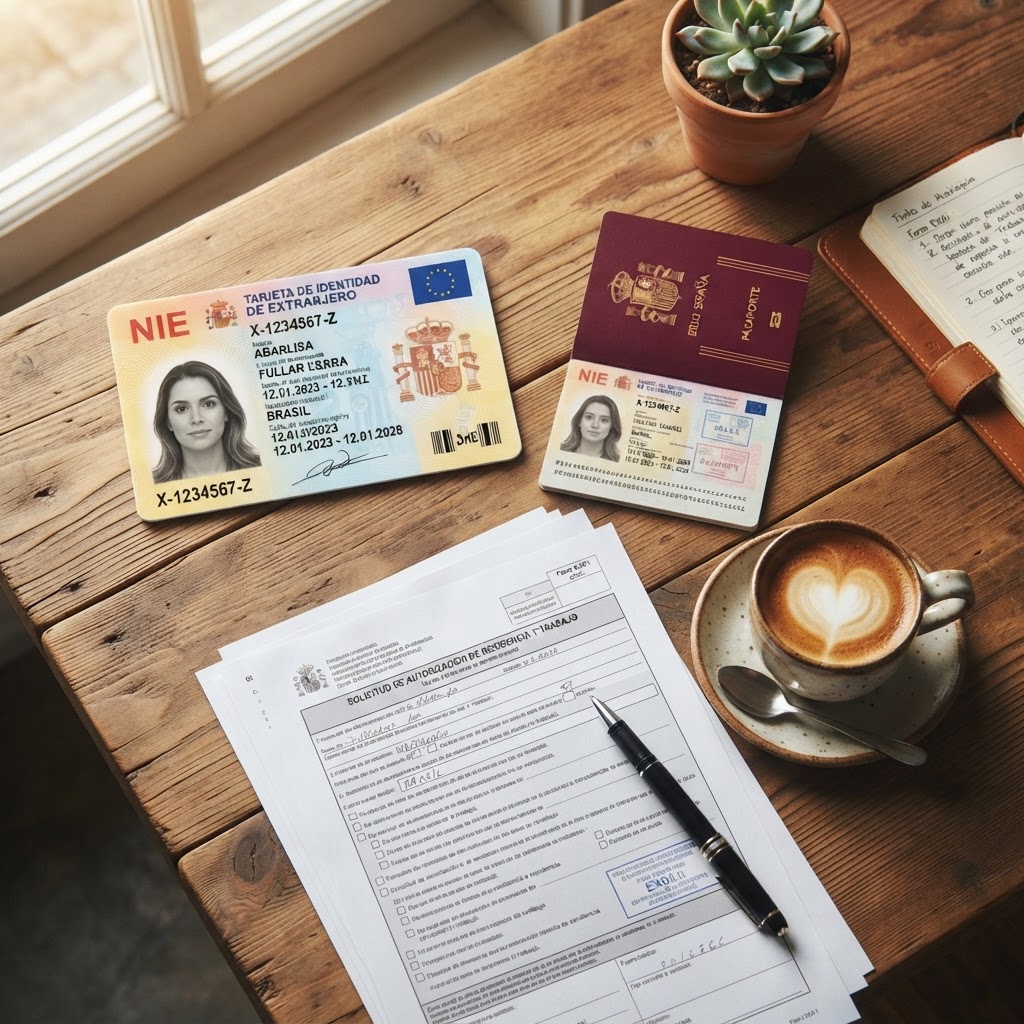
- ✔️ Your NIE
- ✔️ Access to your Digital Certificate and/or Cl@ve
- ✔️ Access to relevant electronic notifications
- ✔️ A clear record of your property taxes
- ✔️ Your community fee arrangements organised
- ✔️ Your utilities correctly registered
- ✔️ Insurance in place
- ✔️ Records of payments
- ✔️ Updated contact details with the relevant authorities
And if you're using a gestor, lawyer or other professional, make sure you understand exactly what they are responsible for checking.
Don't assume someone else is monitoring everything unless that responsibility has been clearly agreed.
🤝 Not Sure Who You Need to Contact?
This is where things can become frustrating.
Sometimes the problem isn't that you don't want to resolve something.
It's that you simply don't know which Spanish authority, bank, professional or organisation you need to speak to.
That's where the CasaViva360 Property Assistant can help.
If you're dealing with a property, banking, government notification or administrative issue and you're unsure where to start, the Property Assistant can help direct you towards the appropriate agency, contact or type of professional for your situation.
Whether you need to identify the relevant government authority, contact your bank, find a gestor, speak to a lawyer, seek tax advice or find another specialist, CasaViva360 can help you work out where to start.
Because sometimes you don't need someone to solve the problem for you.
You just need to know who to contact.
👉 Visit casaviva360.com and try the CasaViva360 Property Assistant.
The Property Assistant provides general guidance and direction. It does not replace professional legal, tax or financial advice. Specific cases should always be confirmed with the relevant authority or appropriately qualified professional.
🇪🇸 The CasaViva360 Takeaway
Spanish banking doesn't have to be something you fear.
But it is something you should understand.
Choose a reputable bank. Understand the fees. Keep your account and contact details up to date. Monitor your Spanish administration. Get your Digital Certificate. Keep records of your bills and payments.
And most importantly:
Don't ignore something simply because you don't understand it.
Spain has systems in place — but knowing how to navigate them can make all the difference.
At CasaViva360, we believe buying and owning property in Spain should be about more than finding a beautiful home.
It's about understanding the whole journey.
Know the property. Know the process. Know Spain.
CasaViva360
This article is for general information only and does not constitute legal, tax, banking or financial advice. Banking fees, regulations and administrative procedures can change. Always check current terms and requirements with the relevant bank, authority or qualified professional.
Get the latest Spain property insights
Market reports, area guides, and new articles — straight to your inbox.